







BRICS 2026 Was About More Than Diplomacy
The flags have started coming down around the venue, the handshakes have been photographed and world leaders are leaving New Delhi. But the real story of the BRICS Summit 2026 may only be beginning.
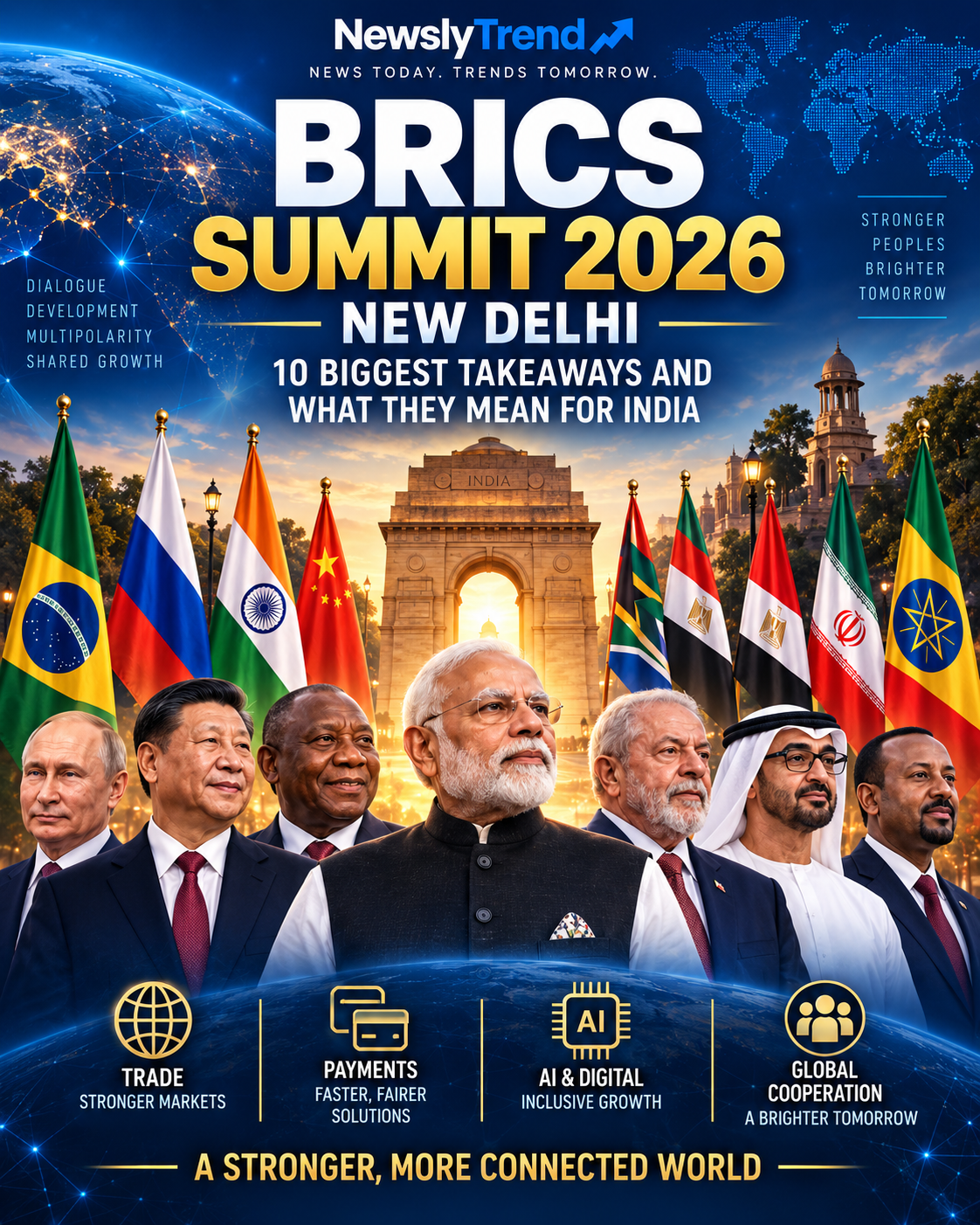
Hosted by India in New Delhi on September 12 and 13, the 18th BRICS Summit brought together leaders from an expanded group that now represents roughly half of the global population. Prime Minister Narendra Modi used the gathering to push a message centred on practical cooperation at a time of geopolitical conflict, fractured supply chains, trade restrictions and rapid technological disruption.
The biggest change in BRICS is perhaps one of tone.
Rather than concentrating on headline-grabbing ideas such as creating a single alternative currency to challenge the US dollar, the New Delhi Declaration focused substantially on mechanisms that could actually be implemented: interconnected payment systems, local-currency settlements, digital infrastructure, AI cooperation, industrial technology, development financing and stronger institutions.
Here are the 10 biggest takeaways from BRICS Summit 2026 and why they matter.
1. BRICS Has Moved Beyond the Original Five-Nation Club
For years, BRICS was easy to explain: Brazil, Russia, India, China and South Africa.
That simplicity has disappeared.
The expanded organisation now brings together a much wider group of major developing economies and energy producers, giving BRICS substantially greater demographic and geopolitical weight.
According to the Associated Press, the enlarged bloc represents approximately half of the world’s population.
But expansion brings its own problem.
A larger BRICS has more influence, but also more internal differences.
Countries do not necessarily agree on their relationships with the United States, China, Russia or Europe. Neither do they always share the same positions on regional conflicts or global economic policy.
India’s challenge therefore has been to prevent BRICS from becoming either an anti-West political club or an organisation that produces impressive declarations but little practical action.
That makes the New Delhi summit especially important.
2. No BRICS Currency — At Least Not for Now
For several years, speculation about a “BRICS currency” has generated headlines around the world.
The 2026 summit offered a much more pragmatic direction.
The New Delhi Declaration did not announce a common BRICS currency. Instead, member countries backed further discussions on using local currencies for trade and investment settlements.
The goal is straightforward: cross-border transactions between participating economies should ideally become faster, cheaper and less dependent on multiple financial intermediaries.
The declaration specifically acknowledged that there is no single solution suitable for every member economy.
That distinction matters.
BRICS is not suddenly replacing the dollar.
It is gradually exploring ways to give members more options when conducting trade with each other.
3. Cross-Border Payments Could Become BRICS’ Most Important Economic Project
Perhaps the most commercially significant part of the summit concerns payments.
The BRICS Payment Task Force is examining how national payment and financial messaging systems could become more interoperable.
The stated ambition is to make cross-border payments faster, safer, cheaper and more accessible.
For ordinary consumers this may sound technical.
For businesses, it is not.
Imagine an Indian exporter selling machinery to Brazil, an Indian technology company working with a UAE customer or a South African enterprise sourcing products from India.
Cross-border payments typically involve banking fees, currency conversions, settlement delays and multiple intermediaries.
If BRICS nations can reduce some of this friction, businesses engaged in intra-BRICS trade could benefit.
4. UPI Could Find a Bigger International Opportunity
India enters these conversations with an important advantage: it has already built digital-payment infrastructure at enormous scale.
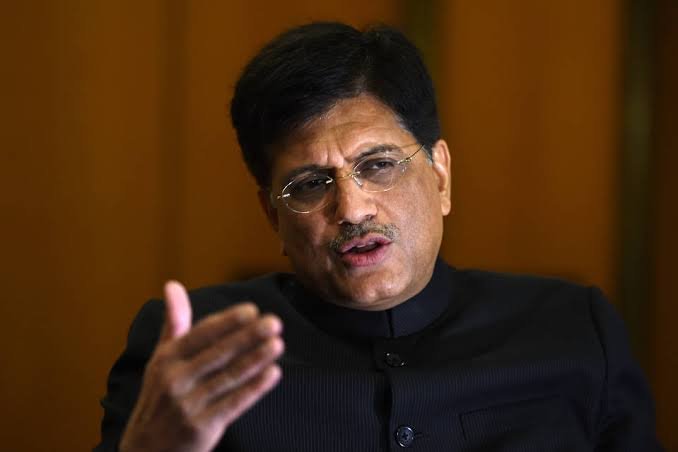
Commerce and Industry Minister Piyush Goyal has advocated linking national payment systems and pointed to India’s Unified Payments Interface as a possible foundation for greater cross-border cooperation among BRICS economies.
This does not mean all BRICS countries will simply adopt UPI.
A more realistic possibility is interoperability.
India’s UPI network could connect with compatible payment infrastructure in other countries, making cross-border transactions easier without requiring each market to abandon its own domestic payment architecture.
If implemented gradually, UPI’s next growth chapter could therefore be international rather than merely domestic.
5. India Has Put Digital Public Infrastructure on the Global Agenda
UPI is only one part of India’s larger digital story.
The New Delhi Declaration acknowledged a proposal to establish a BRICS repository for Digital Public Infrastructure, alongside pilot projects based on DPI solutions.
Digital Public Infrastructure broadly refers to foundational digital systems capable of enabling services such as identity, payments, document exchange and public-service delivery.
India’s own experience provides an obvious reference point.
The country’s broader digital ecosystem has demonstrated how population-scale platforms can underpin banking, payments, welfare distribution and digital services.
For developing economies that cannot simply import expensive Western technology stacks, open and interoperable infrastructure can be particularly attractive.
This may become one of India’s most important forms of technological diplomacy.
6. Artificial Intelligence Has Become a Global South Issue
AI was another major theme.
BRICS leaders called for artificial intelligence to be safe, secure, inclusive, trustworthy and accessible, while specifically highlighting the requirements of developing economies.
The declaration also recognised India’s hosting of the AI Impact Summit earlier in 2026 and referred to implementing the BRICS framework for AI governance.
This matters because the global AI debate remains heavily dominated by the United States, China and a relatively small group of technology corporations.
BRICS countries are effectively arguing that emerging economies should not become passive consumers of AI developed elsewhere.
They want access to:
AI infrastructure,
computing capacity,
skills,
datasets,
open technologies,
and participation in global AI rule-making.
The battle over AI will not simply be about which company has the smartest model.
It will increasingly be about who controls the infrastructure beneath those models.
7. India Wants BRICS to Become More Useful for Businesses
A particularly interesting Indian imprint on the summit is the focus on industrial competence.
The declaration welcomed the India Centre for BRICS Industrial Competencies, aimed at helping manufacturing companies and smaller businesses adopt Industry 4.0 technologies and advanced digital tools.
This points towards a broader shift.
BRICS cannot remain relevant merely through annual meetings between presidents and prime ministers.
Its long-term credibility will depend on whether an entrepreneur, exporter, technology company or manufacturer can actually identify tangible economic opportunities from the grouping.
The next phase may therefore involve more business matchmaking, startup cooperation, technology transfer, financing and industrial partnerships.
8. Terrorism Produced One of the Strongest Areas of Consensus
The New Delhi Declaration strongly condemned terrorism in all its forms and specifically referenced the April 2025 terrorist attack in Pahalgam.
The wording also addressed terrorism financing, safe havens and the cross-border movement of terrorists.
For India, obtaining consensus on this language is diplomatically significant because BRICS includes countries with very different strategic relationships in South Asia.
It also demonstrated New Delhi’s ability to insert an issue of central national-security importance into a broader multilateral declaration.
9. West Asia Tested Whether an Expanded BRICS Could Still Agree on Anything
The summit arrived during a period of intense instability in West Asia.
That represented a major diplomatic test because BRICS includes countries that do not always see regional events through the same lens.
Yet the grouping managed to produce consensus language calling for restraint, dialogue and diplomacy, while addressing humanitarian concerns and uninterrupted energy and trade flows.
This may be more important than it initially appears.
BRICS does not need every member to share the same foreign policy.
Its usefulness may instead lie in creating a table around which countries with sharply different interests can still negotiate common minimum positions.
10. The Global South Is Becoming the Real BRICS Brand
Prime Minister Modi repeatedly framed BRICS as a platform capable of giving the Global South greater influence.
He warned that geopolitical conflict, climate disasters, supply-chain disruptions and the weaponisation of technology and critical minerals increasingly affect ordinary people across borders.
India also proposed cooperation initiatives covering supply-chain resilience, infectious-disease preparedness, startups, agriculture and energy.
That broad agenda tells us something about where New Delhi wants BRICS to go.
Instead of defining the organisation purely through opposition to existing Western institutions, India appears interested in positioning BRICS as a provider of practical development solutions.
Could BRICS Challenge the G7?
Comparisons between BRICS and the G7 are inevitable, but they can also be misleading.
The two formations operate very differently.
The G7 consists mainly of advanced economies with relatively similar strategic alignments.
BRICS is considerably more diverse.
It includes democratic and non-democratic systems, commodity exporters and importers, geopolitical competitors and nations with different strategic relationships with Washington and Beijing.
That diversity is simultaneously BRICS’ biggest strength and its biggest weakness.
Its population, resources and economic potential are enormous.
Its ability to reach consensus quickly is much less certain.
Why BRICS 2026 Matters for India
For India, the summit produced opportunities at several levels.
Economically, there is potential around trade settlement, payments, investment and technology.
Diplomatically, it allowed New Delhi to demonstrate that it can engage simultaneously with Russia, China, Western economies, the Middle East and developing countries.
Technologically, India can use platforms such as UPI and its wider digital-public-infrastructure experience as instruments of international cooperation.
And strategically, India gets another platform from which to push for reform of global institutions without abandoning relationships with the West.
That balancing act may ultimately be India’s biggest contribution to BRICS.
What Happens After the BRICS Summit?
The most important question now is not what leaders said in New Delhi.
It is what happens next.
Watch these areas closely:
Cross-border payment interoperability.
Local-currency trade mechanisms.
Digital Public Infrastructure pilot projects.
New Development Bank financing.
BRICS AI cooperation.
Startup and MSME programmes.
India-China economic engagement.
Supply-chain and critical-mineral partnerships.
China assumes the next BRICS chairmanship, meaning implementation will increasingly matter more than summit rhetoric.
FAQs
Where was the BRICS Summit 2026 held?
The 18th BRICS Summit was held in New Delhi, India, on September 12-13, 2026.
Did BRICS launch a new currency in 2026?
No. The New Delhi Declaration focused instead on greater use of local currencies and improving cross-border payment connectivity.
Can UPI become a BRICS payment system?
There is no announcement that UPI will become a universal BRICS payment system. However, India is promoting greater interoperability between national payment platforms, and UPI provides an important technological model for such cooperation.
What were the major themes of BRICS 2026?
Trade, cross-border payments, local currencies, AI, digital infrastructure, energy, supply chains, institutional reforms, climate issues, counter-terrorism and cooperation across the Global South were among the major themes.
Why is BRICS important to India?
BRICS gives India a platform to engage major emerging economies, promote Global South priorities, expand trade and technology cooperation, and push for reform of international governance institutions.
NewslyTrend Take
BRICS 2026 did not produce a dramatic new currency or a revolutionary financial system overnight.
What it may have produced is more important: a roadmap for gradually connecting economies that increasingly want alternatives without completely abandoning the existing global order.
For India, that makes BRICS less about choosing between East and West and more about expanding the number of tables at which New Delhi can shape the conversation.