









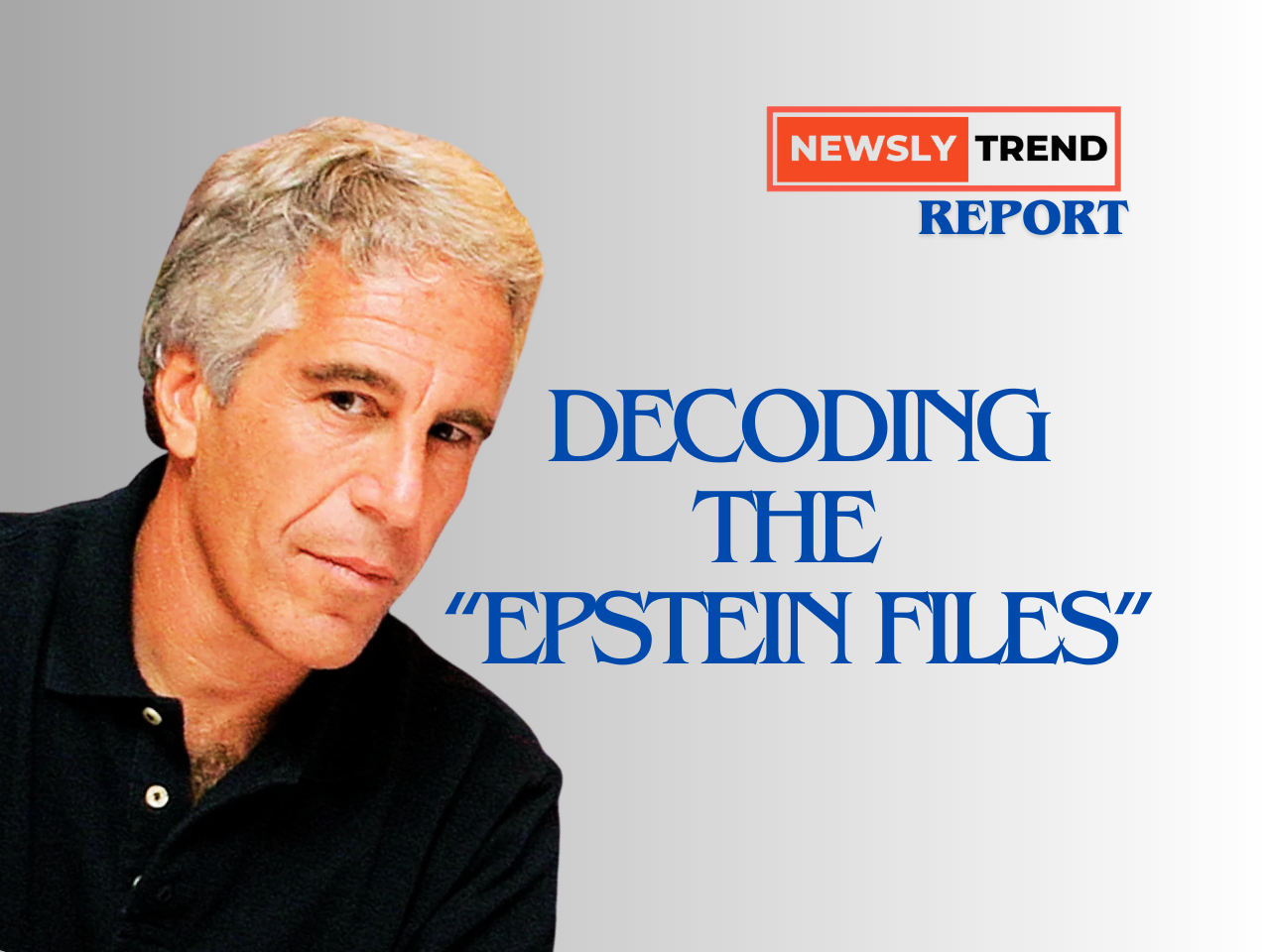
Why Jeffrey Epstein is back in the headlines: the DOJ’s “Epstein files” release deadline, what the files include, how Epstein died in jail, and what it could mean for US leadership and politics.
Why is Jeffrey Epstein in the news now?
Jeffrey Epstein has been dead since 2019, but his case has returned to the center of American politics and media for one big reason: the US Justice Department (DOJ) is facing a legal deadline to release a large set of unclassified records tied to the Epstein investigation—often referred to collectively as the “Epstein files.” AP News
In parallel, House Oversight Committee Democrats have been releasing batches of images from Epstein’s estate—part of a much larger trove reported to include tens of thousands of photos—arguing that the public deserves transparency about Epstein’s network and how institutions handled the case. Reuters and AP report that some of these releases include photos featuring high-profile figures (context varies and images do not necessarily imply wrongdoing), and they are arriving just as the DOJ release deadline approaches.Reuters
The result is a combustible mix: a mandated disclosure moment, renewed congressional pressure, and a public already primed by years of speculation and distrust about what the government knows—and what it has withheld.
Why was Epstein in jail?
Epstein was a wealthy financier who became a registered sex offender after a controversial 2008 Florida plea deal. In 2019, he was arrested again and federally charged in New York with sex trafficking and conspiracy, accused of abusing and trafficking underage girls and young women. He was being held in federal custody while awaiting trial.
The 2019 case mattered because it promised, for the first time in years, a deeper public accounting of:
- how Epstein operated,
- who enabled him,
- whether other individuals committed crimes or helped conceal them, and
- how earlier justice-system failures occurred.
How did Epstein die in jail?
Epstein died on August 10, 2019 while in custody at the Metropolitan Correctional Center (MCC) in New York.
Official finding: The New York City Medical Examiner ruled the death a suicide by hanging. A later US DOJ Inspector General review also concluded Epstein died by suicide, while documenting serious failures and breakdowns in jail procedures.
Why the death remains controversial in public debate:
- Epstein’s high profile and potential cooperation value created strong incentives for speculation.
- Reports and investigations described procedural failures (missed checks, staffing issues, and other lapses), fueling mistrust—even as official investigations maintained the suicide conclusion. Wikipedia
It’s important to separate two things that often get blurred online: the official conclusions (suicide) and the broader institutional failure story (how a high-risk detainee could die under federal supervision). The second is real and documented; the first is what authorities have stood by.
What are the “Epstein files”?
“Epstein files” is a catch-all term for records and evidence connected to investigations and legal proceedings around Epstein and associates, including items such as:
- court filings and case exhibits,
- search warrants and investigative materials,
- contact books, flight logs, and communications records,
- victim and witness materials (with protections needed),
- and other archived evidence held by federal agencies. Wikipedia
A key point: the phrase is used differently by different actors. In mainstream reporting, it typically refers to actual case-related records. In parts of social media and partisan commentary, it is sometimes framed as a single “client list” document—an idea that has been disputed in various official/public discussions and is often intertwined with conspiracy narratives. Al Jazeera
What changed in 2025: the “Epstein Files Transparency Act”
In November 2025, Congress passed—and the White House announced the signing of—a law requiring the DOJ to release unclassified Epstein-related documents in a searchable, downloadable format within 30 days, with carve-outs to protect victims and ongoing investigations. The deadline lands around December 19, 2025, which is why this story is erupting right now.
How could this impact US leadership?
Even without new criminal allegations, the politics are straightforward: disclosure events create reputational risk, and reputational risk changes behavior in Washington.
Here are the most likely impact pathways being discussed:
1) Trust in institutions—and the “cover-up” narrative
If the DOJ releases heavily redacted material, delays, or releases documents in a way that looks selective, it could deepen public skepticism—especially because the Epstein case already carries a long shadow of “elite impunity.”
If disclosures are substantial, they could also validate demands for accountability around earlier prosecutorial choices and prison oversight failures.
2) Political leverage and “weaponization” claims
Because Epstein socialized with many prominent figures across business and politics, each disclosure cycle can be used to suggest guilt-by-association. Serious outlets typically stress that a photo, a contact entry, or a flight log mention does not prove criminal conduct—but in an election-era media environment, nuance often loses.
3) New lines of inquiry—real and performative
Some material may generate legitimate follow-up questions about:
- who knew what, when,
- whether earlier reports were ignored,
- and whether institutions failed victims.
At the same time, Congress and campaigns may pursue headline-driven angles that produce more heat than light.
4) Risks to victims and witnesses
A responsible release must protect victim identities and sensitive testimony. A messy disclosure could retraumatize survivors, expose private individuals, or prompt harassment driven by online speculation. That’s one reason redactions and staged releases are debated—though critics argue redactions can also be abused to protect reputations.
What top media platforms are saying
Across major newsrooms, the coverage clusters into a few themes:
DOJ deadline + what may (and may not) be released
- AP emphasizes the scope of records, the legal mandate, and the tension between transparency and victim protection.
- Reuters focuses on the political and congressional dimensions, including the Oversight Committee’s document/photo releases and the looming DOJ deadline.
Congress and the photo/document drops
- ABC News and AP report on new photo batches from Epstein’s estate and the Oversight Democrats’ push for disclosure.
- Axios highlights the shock value of certain images and the political timing, while noting that the released images do not inherently prove criminal conduct. Axios
- WIRED frames the releases through the lens of networks, influence, and the modern accountability ecosystem—how archives, leaks, and viral narratives reshape power. WIRED
Politics, messaging, and public skepticism
- The Guardian reports live political friction around redactions and whether the DOJ complies fully with the deadline. The Guardian
- People.com covers the political conversation around why prior administrations did or didn’t push for release—reflecting how the issue is now used as a campaign talking point. People.com
The “what are the files?” explainer lane
- Britannica and NDTV provide straightforward explainers about what the “Epstein files” refers to and why disclosure keeps returning as a major public issue. Encyclopedia Britannica+1
Bottom Line
Epstein is “in the news now” because the US has reached a forced transparency moment: a law-driven DOJ deadline plus congressional releases, all landing in a highly polarized information environment.
Note: This article is a compiled analysis prepared by the NewslyTrend Editorial Staff, based on publicly available information, verified media reports, and official records. It does not represent original investigative reporting or allege wrongdoing by any individual or institution unless explicitly stated by competent authorities. References to names, images, or associations are included strictly for informational and journalistic context. NewslyTrend respects the presumption of innocence and the privacy and dignity of victims.